Garden problems often begin with the interaction between the plant, its roots, the soil, water, weather, and organisms living in the garden. In California and other regions with variable soils and climates, the same symptom—such as yellow leaves, wilting, or poor growth—can have several different causes, so diagnosis is usually more reliable when the whole growing environment is considered.
Most common garden problems can be traced to a relatively small group of causes: inappropriate soil moisture, poor drainage or compaction, unfavorable soil pH, nutrient deficiencies or excesses, unsuitable light or temperature, pests, and plant diseases. The most useful first step is to identify the symptom and then determine whether the underlying problem is affecting the roots, the leaves, the plant's environment, or the soil.
Common Plant and Soil Problems for Gardeners: How to Identify and Fix Them
When a garden plant starts looking unhealthy, it is tempting to immediately add fertilizer, compost, or a pesticide. That can sometimes make the problem worse. Many nutrient-deficiency symptoms are caused not by a lack of nutrients in the soil but by conditions that prevent roots from absorbing them. Soil pH, excess moisture, poor drainage, root damage, salinity, compaction, and other root-zone problems can all interfere with nutrient uptake.
A good diagnosis therefore starts with observation. Look at the newest and oldest leaves, inspect the soil moisture, examine the roots when practical, consider recent weather and irrigation, and look for insects, disease signs, or physical damage. Soil testing can then help determine whether chemistry is contributing to the problem.
1. Yellow Leaves
Yellowing leaves, or chlorosis, are among the most common symptoms gardeners encounter. Yellow leaves do not automatically mean the plant needs nitrogen. The location and pattern of the yellowing are important clues.
Older leaves turning uniformly yellow
When older leaves gradually become pale or yellow while newer growth remains relatively green, nitrogen deficiency is one possible explanation. Nitrogen is mobile within plants, so when nitrogen supply is inadequate, plants can move nitrogen from older tissues toward actively growing tissues.
However, yellow older leaves can also result from normal leaf aging, excessive irrigation, root damage, or other stresses. If several unrelated plants are showing similar symptoms, examine the growing conditions before applying fertilizer.
Young leaves turning yellow while veins remain green
Interveinal chlorosis means the tissue between leaf veins becomes yellow while the veins remain relatively green. This pattern can occur with iron, manganese, or zinc availability problems, particularly when soil or irrigation-water pH is unfavorable.
High soil pH is particularly important in many California gardens. UC Statewide Integrated Pest Management notes that high pH can reduce the availability of iron, manganese, and zinc and produce symptoms resembling micronutrient deficiencies. :contentReference[oaicite:0]{index=0}
Yellow leaves combined with wet soil
If yellowing occurs while the soil remains saturated for long periods, investigate the root environment before adding nutrients. Prolonged saturation can damage roots and reduce their ability to take up water and nutrients. Excess moisture can also increase susceptibility to root-decay pathogens.
Check whether irrigation is too frequent, whether water is pooling, whether a compacted layer is restricting drainage, and whether the plant is simply being grown in a location that stays wetter than the species can tolerate. :contentReference[oaicite:1]{index=1}
2. Wilting Even Though the Soil Is Wet
Wilting usually makes gardeners think of drought, but a wilted plant can also be suffering from too much water. Roots require oxygen, and prolonged saturation can damage roots enough that the plant becomes unable to absorb water effectively.
Before watering a wilted plant, check the soil several inches below the surface. If it is already wet, additional irrigation may compound the problem.
Possible causes of wilting
- Insufficient irrigation.
- Excessive irrigation.
- Poor drainage.
- Compacted soil.
- Root damage or root disease.
- Very high temperatures or unusually high evaporative demand.
- Recent transplanting or root disturbance.
- Salinity or other root-zone stresses.
UC IPM emphasizes that irrigation requirements depend on soil texture, structure, rooting depth, drainage, plant species, season, microclimate, and irrigation-system efficiency. There is therefore no single watering schedule that works for every garden. :contentReference[oaicite:2]{index=2}
3. Stunted Growth
Plants that remain unusually small can have problems involving nutrients, roots, water, light, temperature, pests, or soil structure.
Start by comparing the affected plants with healthy plants of the same species and age. If only one plant is affected, localized root damage, planting depth, physical damage, pests, or disease may be more likely than a garden-wide nutrient deficiency.
If many plants across the same soil area are stunted, investigate soil conditions. Compaction can restrict root penetration and reduce the movement of water and air through the root zone. USDA Natural Resources Conservation Service identifies soil structure, bulk density, infiltration, water-holding capacity, and related physical properties as important components of soil function. :contentReference[oaicite:3]{index=3}
4. Poor Drainage and Waterlogged Soil
Poor drainage occurs when water cannot move through the root zone quickly enough for the plants being grown. The problem can result from naturally fine-textured soil, compaction, shallow restrictive layers, grading, excessive irrigation, or a high water table.
Typical signs include:
- Water pooling after irrigation or rain.
- Soil remaining saturated for prolonged periods.
- Yellowing or declining plants despite regular irrigation.
- Root decay.
- Surface algae or persistent wetness.
- Plants that perform poorly in one low area but better elsewhere.
Do not assume that adding large quantities of organic material will automatically solve severe drainage problems. The appropriate response depends on why water is accumulating. A surface amendment may help some soils, while a restrictive subsurface layer may require a different approach.
Healthy soil structure improves the movement and storage of water and air. NRCS describes healthy soils as better able to infiltrate and retain water while reducing runoff and erosion. :contentReference[oaicite:4]{index=4}
5. Compacted Soil
Compacted soil has reduced pore space because soil particles have been pressed together. Roots may have difficulty penetrating the soil, while water infiltration, drainage, and gas exchange can also be affected.
Common signs of compaction include:
- Hard soil that is difficult to dig.
- Water pooling on the surface.
- Shallow roots.
- Plants struggling after transplanting.
- Roots concentrated near the soil surface.
- Soil that becomes extremely hard when dry.
Working or walking on soil while it is wet can increase the risk of compaction. NRCS notes that compaction reduces pore space and can reduce infiltration, drainage, aeration, and root penetration. :contentReference[oaicite:5]{index=5}
How to improve compacted garden soil
- Avoid unnecessary traffic on planting beds.
- Avoid working soil when it is excessively wet.
- Maintain organic inputs appropriate for the soil and crop.
- Keep soil covered with living plants, residues, or suitable mulch.
- Use reduced-tillage practices where practical.
- Investigate whether a deeper restrictive layer is responsible for the problem.
Repeatedly turning or pulverizing soil is not necessarily the best long-term solution. NRCS soil-health guidance emphasizes minimizing disturbance, maintaining soil cover, increasing biodiversity, and maintaining living roots where practical. :contentReference[oaicite:6]{index=6}
6. Soil pH Problems
Soil pH affects the chemical form and availability of nutrients and influences root and microbial processes. A plant can therefore show what looks like a nutrient deficiency even when the nutrient is present in the soil.
For many garden plants, moderately acidic to near-neutral soil is suitable, but the ideal range varies by species. UC IPM identifies approximately pH 6.0 to 7.5 as a useful general range for many gardens and landscapes while noting that individual plants differ in their requirements. :contentReference[oaicite:7]{index=7}
Problems associated with high soil pH
High-pH soils can reduce the availability of several micronutrients, particularly iron, manganese, and zinc. Symptoms can include pale new growth and interveinal chlorosis.
High pH is particularly relevant when growing acid-loving plants in alkaline soils. Instead of repeatedly adding individual micronutrients, determine whether pH is preventing normal nutrient uptake.
Problems associated with low soil pH
Strongly acidic soils can create their own nutrient-availability problems and can increase the availability of elements that may become toxic at excessive concentrations. Plants adapted to neutral or alkaline conditions may perform poorly in strongly acidic soil.
How to diagnose a pH problem
- Identify the plant species and its preferred soil conditions.
- Observe whether symptoms occur across an entire soil area or only around individual plants.
- Test soil pH rather than relying on appearance alone.
- Consider irrigation-water pH and alkalinity when relevant.
- Interpret nutrient results together with pH rather than treating each number independently.
Penn State Extension likewise recommends considering soil pH when selecting and establishing landscape plants because soil outside a plant's preferred range can increase the likelihood of nutrient deficiencies and toxicities. :contentReference[oaicite:8]{index=8}
7. Nutrient Deficiencies
Nutrient deficiencies can cause discoloration, reduced growth, smaller leaves, distorted foliage, poor flowering, reduced fruiting, and, in severe cases, dieback. The challenge is that nutrient symptoms frequently overlap.
UC IPM notes that many apparent nutrient deficiencies are not caused by an actual shortage of nutrients in the soil. Root injury, poor drainage, inappropriate irrigation, unfavorable pH, hard layers, nematodes, and root pathogens can all interfere with nutrient uptake. :contentReference[oaicite:9]{index=9}
Nitrogen deficiency
Nitrogen deficiency commonly produces general paling or yellowing, particularly on older foliage, along with reduced vegetative growth. Nitrogen is mobile within plants, so older leaves can show symptoms first.
Before applying nitrogen, consider whether the plant actually needs additional nitrogen and whether its roots can access the existing supply. Excess nitrogen can also create undesirable growth patterns and is not an appropriate universal treatment for poor plant performance.
Phosphorus deficiency
Phosphorus deficiency can be associated with slow growth and, in some plants, dark green, reddish, purple, or bronze coloration. However, similar symptoms can arise from temperature stress, root problems, or other nutritional imbalances.
Adding phosphorus without testing can be counterproductive when soil phosphorus is already adequate. Soil testing is particularly useful when repeated fertilizer applications have occurred over many years.
Potassium deficiency
Potassium deficiency can produce browning or scorching along leaf margins and tips, weak growth, and other stress symptoms. Salinity and other nutrient imbalances can also interfere with potassium uptake.
Because visual symptoms overlap, a soil test can help determine whether additional potassium is actually warranted. University of Utah Extension materials also note that excessive potassium can interfere with the uptake of other nutrients. :contentReference[oaicite:10]{index=10}
Iron deficiency
Iron deficiency commonly appears as interveinal chlorosis on younger leaves. A plant can show iron-deficiency symptoms even when soil contains measurable iron because soil chemistry can make iron less available to roots.
High soil pH is an especially important consideration. Correcting the underlying root-zone condition can be more useful than repeatedly applying iron without determining why the plant cannot obtain it.
Magnesium deficiency
Magnesium deficiency can cause interveinal chlorosis, particularly on older leaves because magnesium is relatively mobile within the plant. However, similar patterns can occur with other nutrient disorders.
Do not use a single visual symptom as proof of a magnesium deficiency. Soil chemistry, plant species, irrigation, and other nutrient levels should be considered together.
Calcium problems and blossom-end rot
Blossom-end rot is often described as a calcium deficiency, but simply adding calcium to the soil does not necessarily correct it. The disorder is strongly associated with inadequate calcium delivery to developing fruit, which can occur when water availability to the plant fluctuates.
Consistent irrigation, healthy roots, appropriate soil moisture, and avoiding excessive stress are therefore important parts of management. If soil calcium is already adequate, additional calcium may not address the underlying problem.
8. Too Much Fertilizer
More fertilizer does not necessarily mean healthier plants. Excess soluble salts can damage roots and create leaf-edge burn, poor germination, wilting, or stunted growth.
Excess fertilizer can also create nutrient imbalances. High concentrations of one nutrient can interfere with the uptake of others, producing symptoms that resemble deficiencies.
Compost can contribute to this problem when it is applied excessively or contains high concentrations of soluble salts. Oregon State University Extension notes that excessive compost additions can stress plants and contribute nutrients such as phosphorus and potassium beyond what the garden requires. :contentReference[oaicite:11]{index=11}
9. Low Organic Matter
Organic matter is an important component of soil function. It contributes to aggregation, nutrient cycling, water retention, and biological activity, although the appropriate amount depends on soil type, climate, land use, and management.
Low organic matter can be associated with poor soil structure, reduced water-holding capacity, and limited biological activity. But adding compost indefinitely is not a substitute for understanding the soil's actual condition.
NRCS identifies organic matter as an important soil-health indicator and describes relationships between organic matter, soil structure, nutrient retention, water movement, and biological activity. :contentReference[oaicite:12]{index=12}
Ways to build soil organic matter
- Return appropriate plant residues to the soil.
- Use finished compost when appropriate.
- Grow cover crops where practical.
- Maintain living roots for more of the year.
- Reduce unnecessary soil disturbance.
- Use mulch to protect exposed soil.
- Maintain diverse plantings where appropriate for the garden.
Organic matter management should be based on the soil and growing system rather than on the assumption that more is always better.
10. Poor Plant Growth in Sandy Soil
Sandy soils generally contain larger particles and larger pores than clay soils. They can drain quickly and may have less capacity to retain water and nutrients than finer-textured soils.
If plants in sandy soil repeatedly wilt or require frequent irrigation, examine irrigation frequency, rooting depth, organic matter, and the plant's tolerance of dry conditions.
Oregon State University Extension notes that sand alone has limited capacity to hold water and nutrients and that organic amendments can be useful in improving soil properties when selected and used appropriately. :contentReference[oaicite:13]{index=13}
11. Heavy Clay Soil
Clay soils can hold substantial quantities of water and nutrients, but they may drain slowly and become difficult to work when excessively wet or dry. Compaction can make these problems more pronounced.
A common mistake is to add large quantities of sand to clay soil. Mixing insufficient sand into clay can produce an undesirable dense mixture rather than creating a well-drained soil.
Managing traffic, avoiding tillage when soil is wet, maintaining organic matter, using appropriate plantings, and addressing drainage constraints are often more useful than attempting to radically change the soil's texture.
12. Aphids
Aphids are small sap-feeding insects that commonly cluster on young growth and the undersides of leaves. They can cause curled, distorted, or weakened growth and produce honeydew, a sticky substance that can attract ants and support sooty mold.
If you see ants repeatedly climbing a plant covered with aphids, investigate both problems rather than treating only the visible ants. Aphids can be managed through physical removal, water sprays, conservation of natural enemies, and other targeted methods when necessary. UC IPM recommends monitoring and appropriate treatment rather than automatically escalating to broad pesticide applications. :contentReference[oaicite:14]{index=14}
13. Ants Associated With Aphids
Ants and aphids can form a mutually beneficial relationship in the garden. Aphids produce honeydew, while ants may protect aphids from predators and move them to favorable feeding locations.
If aphids are present, reducing the aphid population and limiting ant access to the plant can be more effective than simply killing ants that are visible on the ground.
Inspect stems and growing tips regularly. Wash aphids from plants with a strong stream of water when the plant can tolerate it, prune heavily infested portions when appropriate, and encourage beneficial insects by avoiding unnecessary broad-spectrum insecticide use.
14. Snails and Slugs
Snails and slugs are especially damaging to seedlings and tender foliage. Typical damage includes irregular holes in leaves, missing seedlings, and ragged feeding along leaf margins.
Look for them at night or during cool, damp periods. Check beneath boards, pots, mulch, dense vegetation, and other sheltered locations.
UC IPM identifies the brown garden snail as a common garden pest in California and provides management guidance based on identification and monitoring. :contentReference[oaicite:15]{index=15}
Reducing snail and slug damage
- Remove hiding places near particularly vulnerable plants.
- Hand-pick pests when they are active.
- Inspect gardens regularly rather than waiting for severe damage.
- Protect young seedlings while they establish.
- Use labeled controls when nonchemical measures are insufficient and follow the product label.
15. Powdery Mildew
Powdery mildew produces characteristic white to gray powdery patches on leaves, stems, and buds. Severely affected leaves can yellow, become distorted, or drop prematurely.
Powdery mildew differs from many other fungal diseases because the fungi do not require free water on leaf surfaces to infect. Shaded areas and poor air movement can increase disease severity for susceptible plants. :contentReference[oaicite:16]{index=16}
Management generally focuses on selecting appropriate plants and varieties, improving air movement, avoiding excessively crowded plantings, removing severely affected tissue when appropriate, and using labeled fungicides when necessary.
16. Leaf Spots and Blights
Brown, black, tan, or water-soaked spots can have many causes. Fungal pathogens, bacteria, environmental stress, nutrient disorders, and physical injury can produce overlapping symptoms.
Look closely at the pattern. Are spots concentrated on older leaves? Do they begin along leaf margins? Are they associated with wet weather? Are lesions expanding rapidly? Is there visible fungal growth or bacterial ooze?
Do not assume that every brown spot is a fungal disease. UC Agriculture and Natural Resources emphasizes that plant disorders can result from irrigation, nutrient levels, soil pH, sunlight, temperature, and other noninfectious factors as well as infectious diseases. :contentReference[oaicite:17]{index=17}
17. Root Rot and Declining Roots
Root problems can cause some of the most confusing symptoms because the visible damage appears above ground while the cause is below ground.
Plants affected by root problems may wilt, yellow, stop growing, or decline despite adequate irrigation. In some cases, roots become dark, soft, or decayed.
Excess moisture is a major reason to investigate the root zone. UC IPM notes that prolonged soil saturation can kill roots and increase susceptibility to root-decay pathogens. :contentReference[oaicite:18]{index=18}
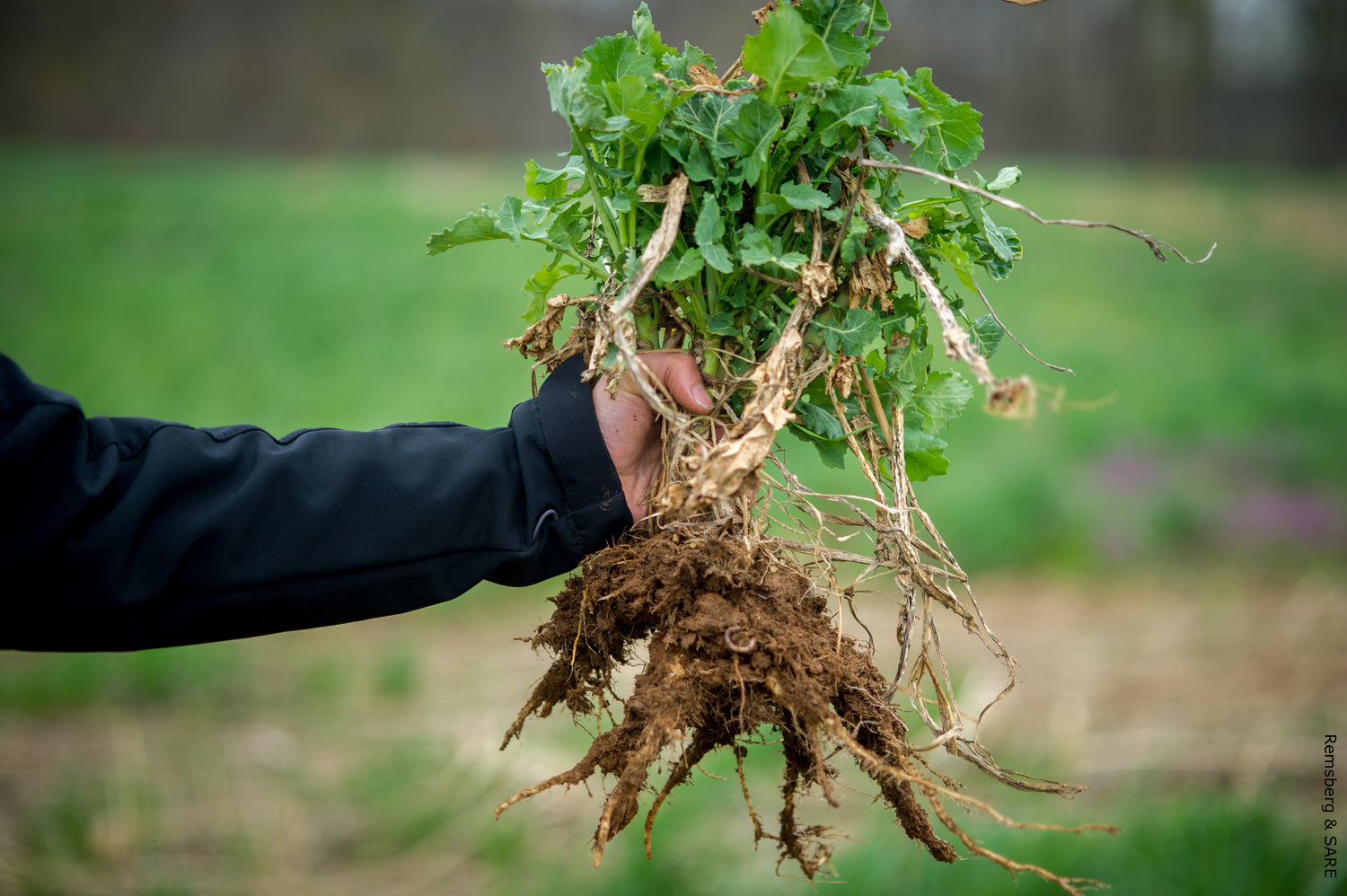
When practical, gently excavate soil near an affected plant and examine the roots. Compare them with roots from a healthy plant of the same species. Avoid damaging the root system unnecessarily during inspection.
18. Plants That Keep Dying After Transplanting
Transplant problems can arise even when soil fertility is adequate. Newly planted roots have a limited ability to supply water to the canopy until the root system establishes.
Planting too deeply, damaging roots, allowing the root ball to dry repeatedly, keeping the soil saturated, or choosing a site with inappropriate sunlight can all contribute to establishment failure.
Water should be managed according to the plant, soil, weather, and rooting conditions rather than by a fixed schedule. Newly planted plants often require closer monitoring because their root systems have not yet explored the surrounding soil.
19. Plants With Lots of Leaves but Little Fruit
Heavy vegetative growth with poor flowering or fruit production can have several causes. Excess nitrogen is one possibility, but temperature, inadequate pollination, insufficient light, plant age, pruning, cultivar characteristics, water stress, and other factors may also be involved.
Do not assume that more fertilizer will increase fruit production. First determine whether the plant is receiving appropriate light, water, temperatures, and growing conditions.
20. Poor Flowering
Plants that grow well but produce few flowers may be responding to environmental conditions rather than a simple nutrient deficiency.
- Insufficient sunlight.
- Excessive nitrogen.
- Temperature stress.
- Water stress.
- Incorrect pruning timing.
- Plant age or seasonal growth cycle.
- Pollination limitations.
- Natural variation between cultivars.
Correct diagnosis depends on the plant species. A condition that suppresses flowering in one species may be completely normal for another.
21. Salt-Affected Soil
Excess soluble salts can interfere with water uptake and damage plants. Salt problems can originate from irrigation water, fertilizers, soil parent material, or repeated irrigation in conditions where salts are not adequately leached.
Symptoms can include leaf-margin burn, reduced growth, poor germination, and apparent drought stress even when soil contains water.
If salt accumulation is suspected, test soil electrical conductivity or another appropriate salinity measure rather than trying to diagnose salinity from leaf appearance alone. The appropriate corrective strategy depends on the type and source of the salts, soil drainage, and irrigation water.
22. Too Much Compost
Compost is useful, but more compost is not automatically better. Compost contains nutrients and salts, and its composition varies considerably by source and production process.
Excessive compost applications can contribute to excessive phosphorus, potassium, salts, or other nutrient accumulation. Oregon State University Extension specifically cautions that excessive compost can cause plant stress and contribute to nutrient movement beyond the root zone. :contentReference[oaicite:19]{index=19}
Use compost as one component of soil management rather than as a universal treatment for every soil problem.
23. Weeds Taking Over the Garden
Weeds compete with desirable plants for light, water, nutrients, and space. Dense weeds can also increase humidity around plant foliage and provide habitat for pests and pathogens.
Integrated weed management generally works better than relying on one method. Mulching, hand removal, cultivation where appropriate, crop competition, timing, and targeted herbicide use can all have roles depending on the garden.
NRCS identifies soil cover as an important soil-health practice because cover can conserve moisture, reduce erosion, moderate soil temperature, suppress weeds, and provide habitat for soil organisms. :contentReference[oaicite:20]{index=20}
24. How to Tell Whether a Problem Is in the Soil or the Plant
A useful diagnostic question is whether the problem follows the plant or follows the soil.
If several plant species are struggling in the same area
Consider soil-related causes such as pH, salinity, compaction, drainage, nutrient imbalance, irrigation-water quality, or a site-specific environmental condition.
If one species is struggling but nearby species are healthy
Consider whether that plant has different requirements for pH, moisture, temperature, drainage, sunlight, or nutrients. Species-specific disease and pest problems should also be considered.
If only one plant is affected
Look for localized root damage, physical injury, transplant stress, pests, disease, or differences in irrigation.
If symptoms occur across an entire property
Investigate irrigation, soil chemistry, weather, drainage, exposure, and other site-wide factors before treating individual plants.
25. When a Soil Test Can Help
A soil test is most useful when the results can answer a specific gardening question. Testing can help evaluate soil pH, nutrient availability, salinity, organic matter, and other properties depending on the test selected.
Soil testing is particularly useful when:
- Plants repeatedly show unexplained nutrient symptoms.
- Different crops perform poorly in the same area.
- You are establishing a new garden.
- Large quantities of fertilizer or compost have been applied historically.
- You are trying to correct soil pH.
- Salinity is suspected.
- Soil conditions vary substantially across the garden.
- You want a baseline before changing management practices.
A soil test does not diagnose every plant problem. Soil tests are strongest when combined with observations of plant symptoms, irrigation, drainage, weather, site history, and root conditions.
26. How to Diagnose a Garden Problem Step by Step
- Identify the plant. Different species have different nutritional, moisture, temperature, and pH requirements.
- Describe the symptom. Note whether the plant is yellow, wilted, stunted, spotted, distorted, burned, or simply failing to flower.
- Determine where symptoms begin. Check old versus new leaves and whether symptoms occur on one side or throughout the plant.
- Check soil moisture. Determine whether the root zone is dry, adequately moist, or saturated.
- Inspect the soil. Look for compaction, crusting, poor infiltration, unusual salts, and other physical conditions.
- Inspect leaves and stems. Look for insects, webbing, honeydew, eggs, fungal growth, lesions, chewing damage, or other signs.
- Inspect roots when practical. Healthy roots should be evaluated in context with the species and growing conditions.
- Review recent management. Consider fertilizer, compost, pesticides, pruning, transplanting, irrigation changes, and construction or grading.
- Consider weather. Heat, cold, drought, excessive rain, wind, and abrupt weather changes can produce plant disorders.
- Test the soil when appropriate. Use laboratory results to confirm or rule out soil-related explanations rather than applying amendments blindly.
- Make one or a few targeted changes. Changing everything simultaneously makes it difficult to determine what actually solved the problem.
- Monitor the response. Keep notes and compare new growth with older damaged tissue.
27. Integrated Pest Management for Garden Problems
Garden pest management does not have to mean immediately spraying an insecticide or fungicide. The U.S. Environmental Protection Agency describes integrated pest management, or IPM, as an approach based on monitoring, accurate identification, prevention, thresholds, and selection of appropriate controls.
For a home garden, this means determining whether a pest actually needs control before treating it. Some insects are harmless or beneficial, and a small pest population may not justify treatment.
When control is necessary, start with appropriate cultural, physical, mechanical, or biological measures when they are effective. Chemical controls can be considered when appropriate, but products should be selected for the specific pest and plant and used according to the current label. :contentReference[oaicite:21]{index=21}
28. Why Treating Symptoms Alone Often Fails
Garden problems are often connected. For example, compacted soil can restrict roots, restricted roots can reduce water and nutrient uptake, and the resulting stress can make a plant appear nutrient deficient. Excess irrigation can create similar symptoms by reducing root oxygen and encouraging root disease.
This is why simply adding fertilizer to a yellow plant does not always work. If the root environment is the actual problem, the added fertilizer may have little effect or may create an additional imbalance.
Healthy soil management is therefore less about finding one universal amendment and more about maintaining suitable physical, chemical, and biological conditions for the plants being grown.
29. Practical Soil Management for Healthier Gardens
There is no single recipe for healthy soil because soils differ naturally. However, several principles are broadly useful.
- Keep soil covered whenever practical.
- Minimize unnecessary disturbance.
- Avoid compacting soil, particularly when wet.
- Use organic matter appropriately rather than indiscriminately.
- Maintain diverse plantings where appropriate.
- Keep living roots in the soil when practical.
- Match irrigation to plant and soil requirements.
- Test soil before making major nutrient or pH corrections.
- Choose plants suited to the site's conditions.
- Monitor plants regularly so problems are caught early.
These practices align with USDA NRCS soil-health principles emphasizing reduced disturbance, soil cover, biodiversity, continuous living roots, improved organic matter, and better soil structure. :contentReference[oaicite:22]{index=22}
30. The Most Important Lesson: Diagnose Before You Amend
The most common mistake in garden problem-solving is treating a symptom as though it were a diagnosis. Yellow leaves do not automatically mean nitrogen deficiency. Wilting does not automatically mean drought. Brown spots do not automatically mean fungal disease. Poor growth does not automatically mean that the soil needs more fertilizer.
Instead, use the symptom as the starting point for an investigation. Examine the plant, roots, soil moisture, drainage, light, temperature, irrigation, pests, disease signs, recent management, and soil chemistry.
When soil is suspected, a properly collected soil sample and an appropriate laboratory analysis can provide useful evidence. The goal is not to make the soil test explain every problem, but to determine whether soil chemistry or physical conditions are contributing to what you see in the garden.
Frequently Asked Questions
Why are my plant leaves turning yellow?
Yellow leaves can result from nutrient deficiencies, unfavorable soil pH, excessive or insufficient irrigation, root damage, poor drainage, disease, natural aging, or other environmental stresses. The pattern of yellowing and the condition of the soil and roots are important for determining the likely cause.
Should I add fertilizer when a plant looks unhealthy?
Not automatically. Many nutrient-deficiency symptoms occur even when nutrients are present in the soil because pH, poor drainage, root damage, salinity, or other conditions prevent normal uptake. Diagnose the problem before adding fertilizer.
Can overwatering cause yellow leaves?
Yes. Prolonged saturation can damage roots and interfere with water and nutrient uptake, producing yellowing and wilting symptoms that can resemble drought stress.
How do I know if my soil is compacted?
Hard soil, poor infiltration, surface pooling, shallow roots, and difficulty digging are common clues. Compaction can reduce pore space and restrict the movement of water, air, and roots.
Does adding compost fix poor soil?
Compost can improve some soil properties, but it is not a universal cure. Excessive compost can contribute salts or nutrient accumulation, and it will not necessarily solve problems caused by drainage restrictions, severe compaction, salinity, or unsuitable soil chemistry.
What soil test should a gardener get?
The appropriate test depends on the problem. A basic fertility test may be sufficient for routine nutrient and pH questions, while persistent plant problems may justify additional analysis of organic matter, salinity, micronutrients, texture, or other properties. The best test is the one that addresses the specific question you are trying to answer.
How can I control garden pests without immediately using pesticides?
Use integrated pest management: identify the pest, determine whether control is actually necessary, monitor the population, correct conditions that favor the pest, and use physical, cultural, biological, or targeted chemical controls as appropriate. EPA recommends IPM as an approach that combines available management methods while reducing unnecessary pesticide use.
Can the same symptom have different causes?
Yes. Yellowing, wilting, leaf spots, stunting, and poor flowering are all symptoms rather than diagnoses. Several unrelated problems can produce similar symptoms, which is why diagnosis should consider the entire growing environment.
Sources
- USDA Natural Resources Conservation Service. Soil Health
- USDA Natural Resources Conservation Service. Role of Organic Matter
- USDA Natural Resources Conservation Service. Soil Health Assessment
- University of California Statewide Integrated Pest Management Program. pH Problems
- University of California Statewide Integrated Pest Management Program. Nutrient Deficiencies
- University of California Statewide Integrated Pest Management Program. Water Deficit and Excess
- University of California Agriculture and Natural Resources. Common Vegetable Garden Diseases and Disorders
- University of Minnesota Extension. Managing Plant Diseases in the Home Garden
- Oregon State University Extension Service. Add Organic Matter to Improve Most Garden Soils
- Oregon State University Extension Service. How to Use Compost in Gardens and Landscapes
- Penn State Extension. Consider Soil pH Before Selecting Trees and Shrubs for Landscape Use
- U.S. Environmental Protection Agency. Integrated Pest Management (IPM) Principles
- Utah State University Extension. Nutrient Deficiencies